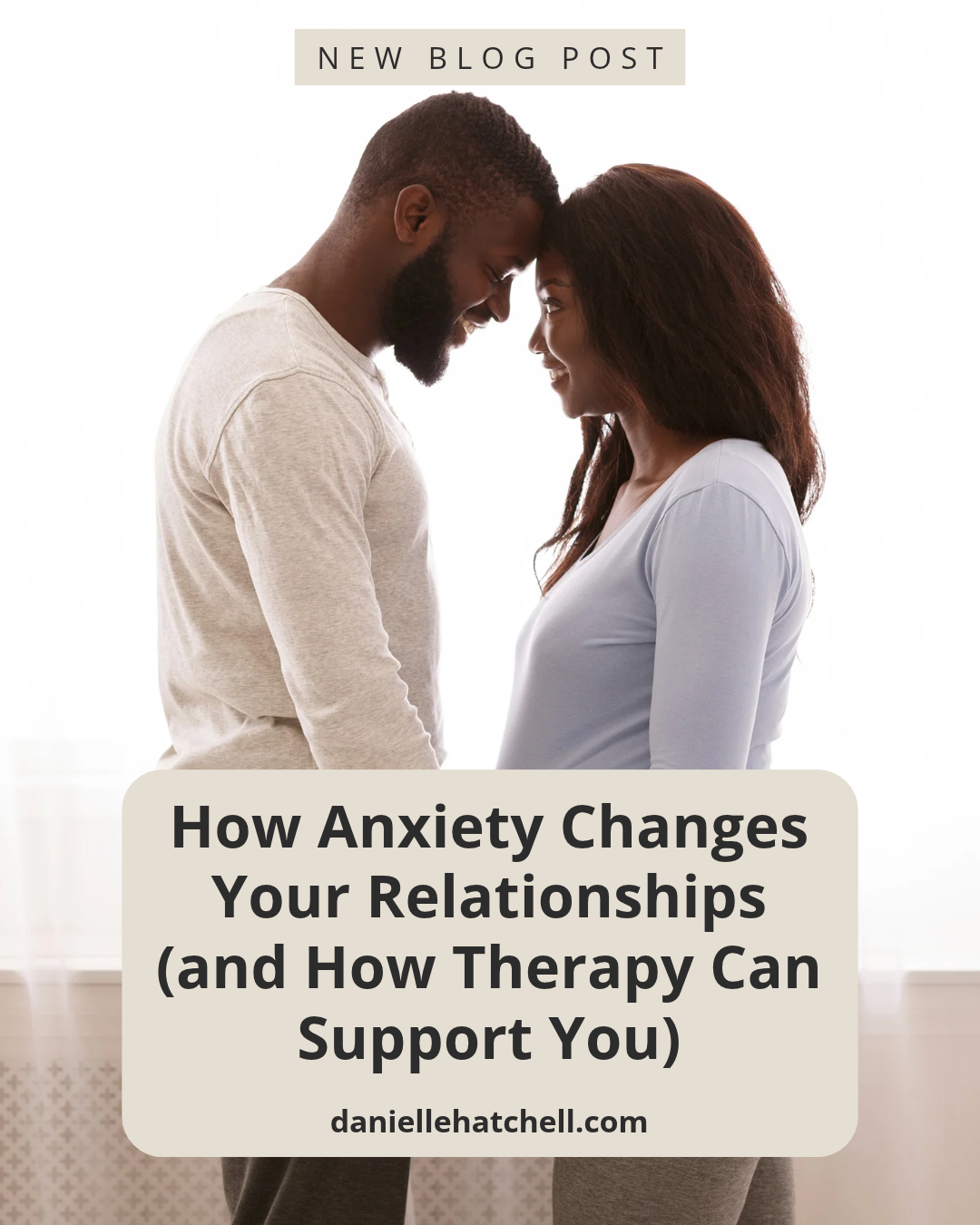
Have you ever noticed how challenging it is to fully show up in your relationships when you're feeling anxious?
In those anxious moments, you may overthink something your partner said, replay a conversation with a friend, or worry that someone is upset with you because they haven't responded to your text.
You might find yourself saying yes when you really want to say no, avoiding difficult conversations, or feeling responsible for making sure everyone around you is happy. Anxiety affects more than your thoughts and emotions. It can also influence how you communicate, respond to conflict, and connect with the people you care about.
As a therapist with more than 27 years of experience, I've worked with many adults who initially sought therapy because they were struggling with anxiety, only to discover how much it was affecting their relationships.
Let's explore some of the ways anxiety can show up in your relationships and what you can do to create healthier connections.
1. You Overthink What People Say and Do
One of the most common ways anxiety affects relationships is through overthinking.
Your partner seems a little distant, and you immediately start wondering if you've done something wrong. A friend doesn't return your call, and you begin questioning whether they're upset with you. Before you know it, you've created an entire story in your mind about what might be happening.
Anxiety has a way of convincing us that uncertainty means something is wrong. When you don't have all the information, your mind tries to fill in the gaps, often with the worst possible explanation. This can lead to unnecessary worry, misunderstandings, and emotional exhaustion.
The next time you catch yourself making assumptions about someone's behavior, stop and ask yourself, "What do I actually know about this situation?"
Separate the facts from the story you're telling yourself. For example, the fact may be that your friend hasn't responded to your text. The story you’re telling yourself might be that they're upset with you or no longer interested in the friendship. Notice when the story you’re telling yourself is being fueled by anxiety, and make another choice. This will allow you to give people the benefit of the doubt.
Recognizing the difference between facts and your worry-filled perception gives you an opportunity to respond with greater awareness instead of reacting to your anxiety.
2. You Avoid Conflict Because You're Afraid of the Outcome
Do you find yourself keeping your feelings to yourself because you don't want to upset someone?
Maybe your partner does something that bothers you, but instead of addressing it, you convince yourself it isn't worth discussing. Or maybe you agree with someone even when you have a different opinion because you don't want to create tension.
For people who struggle with anxiety, conflict can feel threatening. You may worry that expressing your feelings will lead to rejection, criticism, or an argument you won't know how to handle. So you stay quiet.
Unfortunately, avoiding difficult conversations doesn't make the underlying issues disappear. Over time, unexpressed feelings can turn into resentment and create emotional distance in your relationships.
Let’s talk about how to shift this dynamic. Start by practicing honest communication in situations that feel manageable.
You don't have to begin with your most challenging relationship. Try expressing a preference or communicating a small concern with someone you trust. For example, instead of saying, "Whatever you want is fine," practice saying, "I'd actually prefer to do something different."
As you become more comfortable expressing yourself, you can begin addressing more challenging conversations with greater confidence.
3. You Constantly Seek Reassurance From Others
Have you ever asked someone if they're upset with you, received reassurance that everything is fine, and then found yourself asking again a few hours later?
Or maybe you frequently ask your partner whether they still love you, worry about whether your friends genuinely like you, or need someone to confirm that you've made the right decision. Seeking reassurance is a common response to anxiety because it provides temporary relief from uncertainty.
When someone tells you everything is okay, you feel better. But when the anxiety returns, you may find yourself needing reassurance all over again. Over time, this pattern can create frustration in relationships and make it more difficult to trust your own judgment.
What can you do differently?
The next time you feel the urge to seek reassurance, take a moment to notice what you're feeling. Are you afraid of rejection? Are you worried about making a mistake? Or are you uncomfortable because you don't know what will happen next?
Practice allowing yourself to experience some uncertainty without immediately asking someone else to make you feel better. You can remind yourself, "I don't have all the answers right now, and I can handle that."
Learning to understand and trust yourself is an important part of developing healthier relationships.
4. You Put Everyone Else's Needs Ahead of Your Own
If you're someone who struggles with people-pleasing, anxiety may be playing a bigger role in your relationships than you realize. You might say yes to requests even when you're exhausted, take responsibility for other people's feelings, or feel guilty when you need time for yourself. You've become so accustomed to anticipating what others need that you rarely stop to consider what you need.
For many people, these behaviors are connected to a fear of disappointing others or being perceived as selfish. The problem is that constantly prioritizing everyone else's needs can leave you feeling depleted and resentful. And when you repeatedly ignore your own needs, you're also teaching yourself that your feelings and preferences are less important than everyone else's.
I encourage you to begin by checking in with yourself before automatically agreeing to a request. Ask yourself, "Do I genuinely want to do this, and do I have the emotional capacity for it?" If the answer is no, practice communicating that honestly.
You might say, "I'd love to support you, but I don't have the capacity to take that on right now."
Remember, someone else's disappointment doesn't automatically mean you've done something wrong. Setting healthy boundaries allows you to participate in relationships without sacrificing your emotional well-being.
5. You Withdraw or Become Irritable When You're Overwhelmed
Anxiety doesn't always show up as worry or nervousness. At times, it looks like irritability, impatience, or wanting to be left alone. You may spend the entire day managing stress at work, only to come home and find yourself snapping at your partner over something small. It also looks like withdrawing from friends and family because you feel emotionally exhausted and don't have the energy to engage.
When your nervous system has been responding to stress throughout the day, you may have less capacity to manage additional emotional demands. This doesn't excuse hurtful behavior, but understanding what's happening can support you in responding differently.
You can approach this in a healthier way by noticing early signs that you're becoming overwhelmed. Early warning signs can appear as tension in your shoulders, difficulty concentrating, racing thoughts, or feeling unusually impatient.
Instead of waiting until you're completely exhausted, give yourself permission to take a break. You can also communicate what's happening to the people around you. For example, "I've had a stressful day, and I'm feeling overwhelmed. I need a little time to decompress before we talk." This gives the other person an opportunity to understand your needs without assuming your withdrawal or irritability is about them.
How Anxiety Therapy Can Improve Your Relationships
Recognizing these patterns is key, but awareness alone doesn't always lead to change. You may understand that you have difficulty setting boundaries and still feel guilty every time you say no. Or you might recognize that you're overthinking your partner's behavior but continue replaying conversations in your mind.
I explored this in my previous blog, Why Understanding Your Anxiety Isn't Enough to Heal It. Therapy provides an opportunity to understand the emotional patterns contributing to your anxiety while developing practical skills to respond in a more grounded way.
In anxiety therapy, we may explore how past experiences have shaped your expectations in relationships, including your beliefs about conflict, responsibility, and emotional safety.
You can also learn to recognize when your nervous system is activated and practice ways to regulate your emotional responses before reacting. As you develop greater emotional awareness, you may find that you're able to communicate your needs more clearly, better tolerate uncomfortable conversations, and establish healthier boundaries.
For example, instead of immediately apologizing when someone is upset, you can learn to pause and consider whether you've actually done something that requires an apology. You might also become more comfortable allowing others to experience their own emotions without feeling responsible for fixing everything.
These changes can support healthier relationships because you're learning to respond from a place of greater emotional stability rather than fear or anxiety.
If you're curious about what this process involves, I explain it in greater detail in Anxiety Therapy in Maryland: Finding Relief and Feeling Like Yourself Again.
What Happens When You Begin Changing These Patterns?
One of the most rewarding parts of my work is seeing clients develop greater confidence in themselves and their ability to navigate relationships.
I do a happy dance when I see a client who previously avoided difficult conversations begin expressing their feelings honestly, even when they're uncomfortable. I celebrate clients who constantly worried about disappointing others when they start setting boundaries without spending hours feeling guilty afterward.
Of course, these changes take practice. You may still experience anxiety in certain situations, especially when you're learning to respond differently from how you've responded for years. That's a normal part of the process.
In my blog, How Do You Know If Anxiety Therapy Is Actually Working?, I discuss how to recognize progress, even when you're still experiencing occasional anxiety or setbacks.
The goal is to develop the emotional awareness and skills that allow you to navigate your relationships with greater confidence and authenticity.
You Deserve Relationships Where You Can Be Yourself
I encourage you to consider how much energy you spend worrying about what other people think, trying to prevent conflict, or making sure everyone around you is happy. And how is that affecting your ability to enjoy your relationships?
When anxiety influences how you show up with others, it can be challenging to feel genuinely connected because you're so focused on managing their reactions. You deserve relationships where you can express your feelings, communicate your needs, and be yourself without constantly worrying about how others will respond.
That doesn't mean you'll never experience conflict or disagreement. Healthy relationships still require communication, compromise, and a willingness to work through challenges. But you can learn to navigate those experiences without allowing anxiety to determine your every response.
If you've been managing anxiety for years and telling yourself that you're doing fine because you're still functioning, I encourage you to read Why High-Functioning Adults Wait Too Long to Start Therapy.
You don't have to wait until your relationships are suffering to get support.
Anxiety Therapy in Maryland
If anxiety is affecting your relationships, therapy can support you in understanding what's happening and learning healthier ways to respond.
I provide individual anxiety therapy for adults throughout Maryland, including high-achieving professionals who struggle with overthinking, perfectionism, people-pleasing, and difficulty setting boundaries.
Together, we can explore the patterns contributing to your anxiety and develop practical strategies to support healthier relationships and greater emotional well-being.
If you're ready to explore how therapy can support you, I invite you to click here to schedule a free 15-minute phone consultation.
About the Author
Danielle Hatchell, LCPC, is a therapist with over 25 years of experience providing anxiety therapy in Maryland to high-functioning, anxious professionals. Her work supports individuals who are used to showing up for others but are ready to feel more grounded within themselves.
Her approach blends traditional talk therapy with mindfulness, breathwork, and nervous system awareness, helping clients build practical tools while reconnecting with deeper clarity and balance.
