The Link Between High-Functioning Anxiety and Burnout
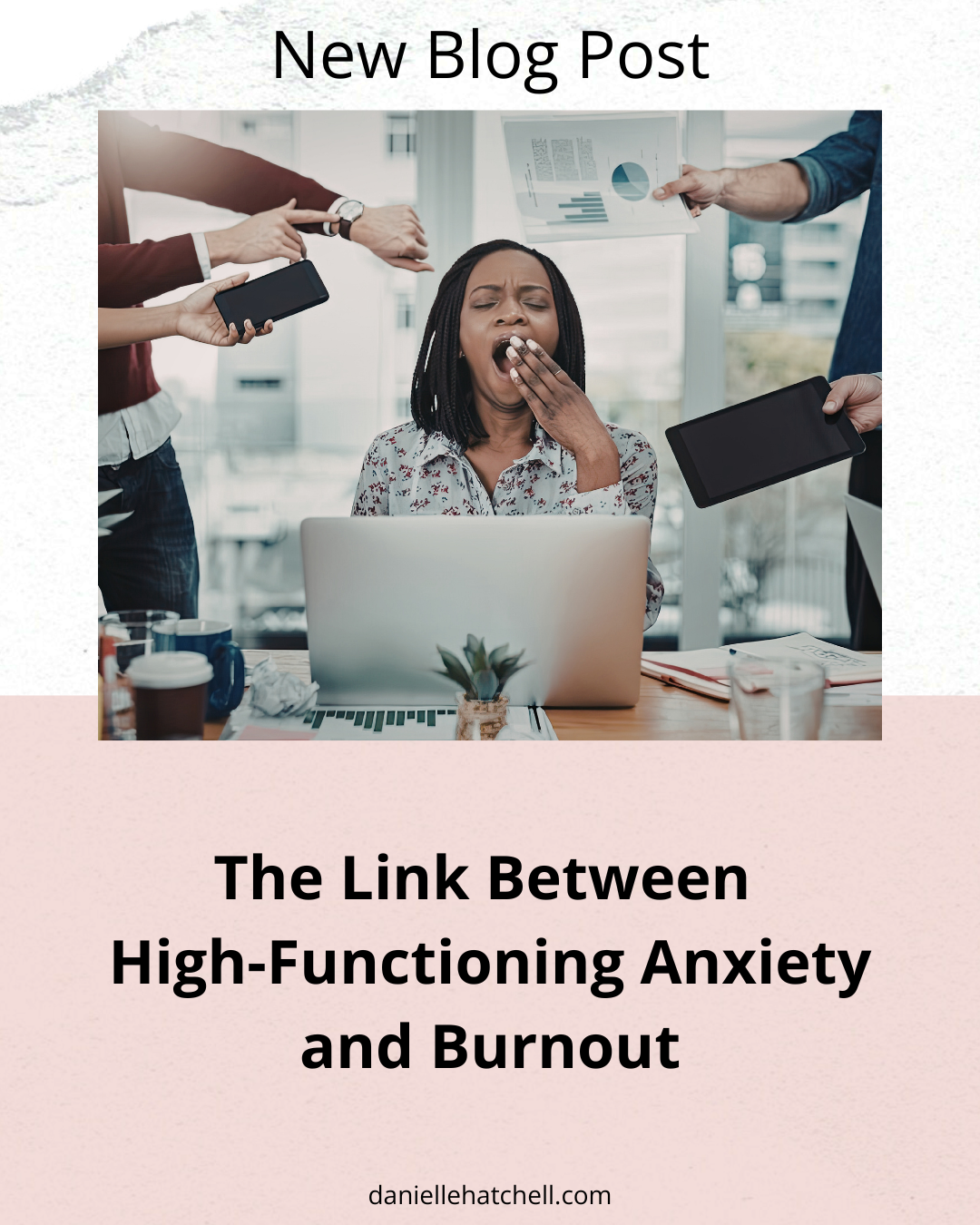
If you are a high-achieving professional, there’s a good chance you’ve become skilled at functioning while stressed.
You know how to push through exhaustion. You know how to meet deadlines, show up for others, and continue producing even when your internal world feels strained.
From the outside, it may even look like you’re handling everything well.
But internally, something may feel off.
You may notice that you feel emotionally exhausted more often than you’d like to admit. The things that used to bring you joy or excitement may not affect you in the same way anymore. You may feel disconnected from yourself, mentally drained, or emotionally numb in ways that are difficult to explain.
And because you’re still functioning, you may not recognize that anxiety has quietly been leading you toward burnout for quite some time.
In my work providing anxiety therapy in Maryland, I often see high-functioning professionals who do not initially realize how much chronic anxiety has impacted their nervous system, emotional well-being, and overall quality of life.
Many people think burnout happens suddenly.
But most of the time, burnout starts much earlier than people realize.
It often begins with chronic, unrecognized anxiety.
If you’ve been noticing signs of emotional exhaustion, difficulty slowing down, or feeling disconnected from yourself, you may also want to read my blog on Why High-Achieving Professionals Struggle to Slow Down because the inability to rest is often one of the earliest warning signs of burnout.
Burnout Often Starts as Unrecognized Anxiety
When most people think about anxiety, they imagine panic attacks, constant worry, or obvious overwhelm.
But high-functioning anxiety often looks much more subtle than that.
It can look like:
Staying overly busy
Taking on too much responsibility
Constantly thinking ahead
Difficulty relaxing
Feeling pressure to stay productive
Struggling to emotionally “turn off”
Because these behaviors are often rewarded professionally, they can easily become normalized.
You may even view them as positive personality traits.
You tell yourself:
“I’m just driven.”
“I work well under pressure.”
“I like staying productive.”
And while some of that may be true, chronic anxiety often hides underneath these patterns.
Your nervous system remains in a heightened state for long periods of time. Your mind stays alert. Your body stays activated. And eventually, your internal resources begin to deplete.
This is one of the reasons burnout can feel confusing for high-functioning professionals.
You don’t necessarily stop functioning.
You simply stop feeling like yourself.
Chronic Overfunctioning Leads to Emotional Depletion
Many high-functioning professionals become so accustomed to overfunctioning that they no longer recognize it as stressful.
You may become the person everyone depends on. The one who handles things. The one who anticipates problems before they happen.
And because you’re capable, people continue bringing more responsibility your way.
Over time, this creates chronic emotional output without enough emotional recovery.
This is where emotional exhaustion often begins.
You may notice:
Feeling emotionally flat or disconnected
Having less patience than usual
Feeling detached in conversations
Struggling to feel excited about things you once enjoyed
Difficulty being emotionally present with loved ones
Many people describe this as feeling numb.
Not necessarily depressed or completely shut down. Just emotionally tired in a way that feels difficult to explain.
Your nervous system was never designed to remain in a constant state of output without restoration.
But high-functioning professionals often override their body’s signals for so long that emotional numbness begins to feel normal.
If this resonates, you may also connect with my blog on How to Tell If You Have High-Functioning Anxiety because many people overlook these symptoms while continuing to perform well externally.
Why High-Functioning Professionals Miss the Signs of Burnout
One of the reasons burnout goes unnoticed for so long is because many high-achieving people continue functioning while feeling emotionally depleted.
You may still be:
Going to work
Meeting deadlines
Taking care of responsibilities
Showing up for others
So you assume you’re fine.
But functioning and feeling emotionally healthy are not the same thing.
Many high-functioning professionals have learned how to disconnect from their own emotional needs in order to continue performing.
At some point, pushing through became more familiar than slowing down and checking in with yourself.
This is especially true for people who learned early in life that being responsible, productive, or high-achieving created safety, approval, or stability.
Over time, chronic productivity can become closely tied to self-worth.
And when your identity becomes connected to achievement, slowing down can begin to feel uncomfortable or even unsafe.
Emotional Numbness Is Often a Nervous System Response
One of the most misunderstood aspects of burnout is emotional numbness.
Many people think numbness means they no longer care.
But often, emotional numbness is actually a protective nervous system response.
When your system has been under prolonged stress for too long, it begins conserving energy.
You may notice that:
You feel emotionally disconnected
You struggle to access joy or excitement
You feel mentally exhausted
You don’t feel fully present in your life
You move through your day on autopilot
This does not mean something is wrong with you.
It means your system is overwhelmed and trying to protect itself.
Your body and nervous system are asking for restoration.
And unfortunately, many high-functioning professionals interpret these signs as personal failure instead of recognizing them as signals that support is needed.
Prevention Is Easier Than Recovery
One of the most important things I tell my clients for anxiety therapy in Maryland is this:
Prevention is much easier than recovery.
Once burnout becomes severe, it often takes significantly longer to rebuild emotional capacity, regulate your nervous system, and reconnect with yourself.
This is why paying attention to early signs matters.
Things like:
Chronic emotional exhaustion
Difficulty slowing down
Constant mental activity
Irritability
Emotional numbness
Trouble being present
Feeling disconnected from yourself
These are not things to ignore simply because you are still functioning.
They are important signals.
And the earlier you begin addressing them, the easier it is to shift the patterns contributing to burnout.
What Anxiety Therapy Can Help You Understand
In anxiety therapy, we begin identifying the patterns that keep you chronically activated and emotionally depleted.
We explore:
Overfunctioning
Chronic responsibility
Perfectionism
Fear-based productivity
Nervous system dysregulation
Difficulty resting
Emotional suppression
Most importantly, we begin helping your system learn that you do not have to stay in constant motion in order to feel safe, successful, or valuable.
This work is not about becoming less driven.
It’s about learning how to function in a way that is sustainable.
You can still care deeply about your work and your goals without sacrificing your emotional well-being in the process.
If you’re exploring anxiety therapy in Maryland, this work can help you better understand the connection between anxiety, burnout, emotional exhaustion, and nervous system depletion before those patterns become overwhelming.
You can learn more about my approach to anxiety therapy in Maryland here.
A More Present and Sustainable Way of Living
Many high-functioning professionals believe they just need to “push through” one more busy season before they finally slow down.
But for many people, that season never fully arrives.
There will always be another responsibility, another project, another demand.
Learning how to care for your nervous system now is one of the most important investments you can make in your emotional health, your relationships, and your overall quality of life.
You deserve to feel connected to your life while you’re living it.
Not just productive within it.
Download the Guide
If you’ve been noticing signs of emotional exhaustion, anxiety, or difficulty slowing down, I created a free Guide called The High-Functioning Anxiety Reset: 3 Ways to Calm Your Mind Without Losing Your Edge.
Inside, I walk you through a simple five-minute process that can help you regulate anxiety in the moment and begin recognizing some of the patterns contributing to emotional overwhelm and burnout.
You can download the Guide here to get started.
About the Author
Danielle Hatchell, LCPC is a therapist with over 25 years of experience providing anxiety therapy in Maryland to high-functioning, anxious professionals. Her work supports individuals who are used to showing up for others but are ready to feel more grounded within themselves.
Her approach integrates traditional talk therapy with mindfulness, breathwork, and nervous system awareness, helping clients build practical tools while reconnecting with a deeper sense of clarity and balance.
